Access control has become an essential part of modern security management. From office buildings and factories to stadiums and schools, organizations need reliable solutions to regulate pedestrian entry and exit. One of the most widely used access control devices is the tripod turnstile.
Tripod turnstiles are popular because they are affordable, durable, and easy to integrate with various access control systems. In this article, we will explore what tripod turnstiles are, how they work, their key features, advantages, disadvantages, applications, and how to choose the right model for your facility.
What Is a Tripod Turnstile?
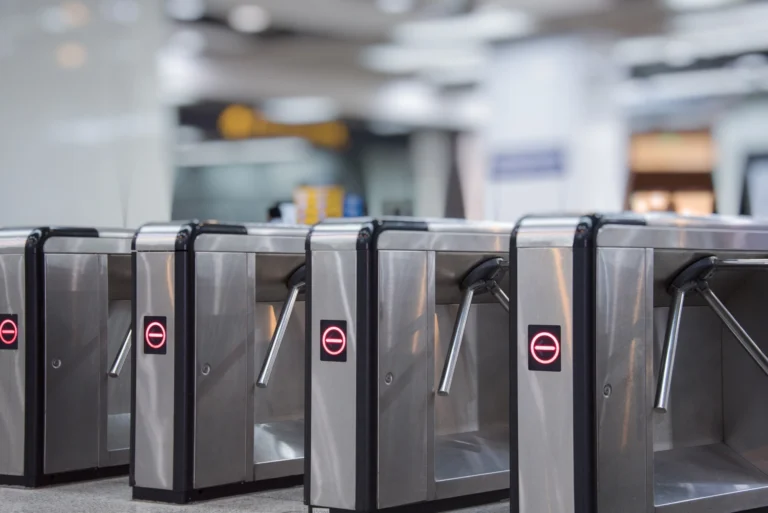
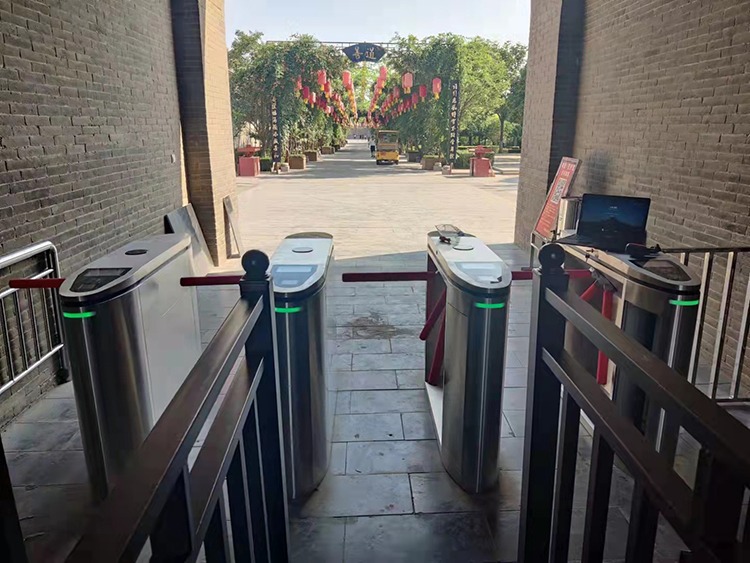
A tripod turnstile is a mechanical access control gate consisting of three rotating arms arranged in a tripod formation. These arms allow only one person to pass at a time, ensuring controlled and orderly pedestrian flow.
Tripod turnstiles are usually installed at entrances where moderate security is required. They can operate in one-way or two-way mode and can be connected to systems such as RFID card readers, fingerprint scanners, facial recognition terminals, QR code scanners, and ticketing systems.
Because of their simple design and proven reliability, tripod turnstiles have become a standard solution in many public and private facilities.
How Does a Tripod Turnstile Work?
The working principle of a tripod turnstile is straightforward:
1. A user presents a valid credential (card, fingerprint, face scan, or QR code).
2. The access control system verifies the credential.
3. If authorization is granted, the turnstile unlocks.
4. The user pushes the arm and passes through.
5. After the passage, the arm automatically locks again.
In case of emergency, many tripod turnstiles support drop-arm or free-passage mode, allowing quick evacuation.
Key Features of Tripod Turnstiles
Robust Mechanical Structure
Tripod turnstiles are built with strong stainless steel or powder-coated steel housing. This ensures long-term durability even in high-traffic environments.
Compact Design
Their small footprint makes them suitable for areas with limited space.
Bidirectional Operation
Most models support both entry and exit control.
Integration Capability
Tripod turnstiles can be integrated with:
– RFID / NFC card readers
– Biometric devices
– QR / barcode scanners
– Time and attendance systems
Emergency Release
Automatic arm drop or free rotation during power failure or fire alarm activation.
Advantages of Tripod Turnstiles
Cost-Effective Solution
Compared to flap barriers, swing gates, and speed gates, tripod turnstiles are more affordable.
Easy Installation
They require minimal civil work and can be installed quickly.
Simple mechanical design reduces failure rates.
They require minimal civil work and can be installed quickly.
Improved Crowd Control
Ensures one-person-per-entry, reducing tailgating
Low Maintenance
Routine cleaning and occasional lubrication are usually sufficient.
Disadvantages of Tripod Turnstiles
While tripod turnstiles are highly practical, they also have limitations:
– Not suitable for wheelchair users without an additional accessible gate
– Lower aesthetic appeal compared to modern speed gates
– Moderate security level only
Understanding these limitations helps you decide if tripod turnstiles match your requirements.
Common Applications of Tripod Turnstiles
Tripod turnstiles are widely used in many sectors:
Office Buildings
For employee attendance tracking and visitor control.
Factories and Industrial Sites
To restrict access to authorized personnel.
Schools and Universities
To enhance campus security.
Stadiums and Arenas
For ticket verification and crowd management.
Public Transportation
Bus terminals, metro stations, and railway entrances.
Indoor vs Outdoor Tripod Turnstiles
Indoor Models
– Sleek design
– Focus on aesthetics
– Usually lighter materials
Outdoor Models
– Weatherproof housing
– Anti-rust coating
– Higher protection rating
Choosing the right type ensures long-term performance.
Types of Tripod Turnstiles
Manual Tripod Turnstiles
Operated without electronics. Suitable for basic crowd control.
Semi-Automatic Tripod Turnstiles
Unlock electronically, rotate manually.
Fully Automatic Tripod Turnstiles
Motorized rotation with smoother operation.
Important Factors When Choosing a Tripod Turnstile
Security Level
Determine whether basic or moderate security is sufficient.
Throughput Requirement
Estimate how many people will pass per minute.
Integration Needs
Ensure compatibility with your access control system.
Installation Environment
Indoor or outdoor usage.
Budget
Balance between cost and performance.
Tripod Turnstiles and Access Control Systems
Tripod turnstiles work best when combined with a complete access control solution:
– Software platform
– Credential readers
– Database management
– Reporting and monitoring
This combination enhances security and operational efficiency.
Maintenance Tips for Tripod Turnstiles
Clean arms and housing regularly
– Inspect mechanical parts monthly
– Test emergency release function
– Keep electronics dry
Preventive maintenance extends equipment lifespan.
Why Choose Tripod Turnstiles for Your Facility?
Tripod turnstiles offer an excellent balance between cost, durability, and functionality. For organizations seeking a dependable and economical access control solution, tripod turnstiles remain one of the best choices.
Final Thoughts
Tripod turnstiles continue to be a popular access control solution worldwide. Their affordability, reliability, and easy integration make them suitable for many industries. By understanding their features and applications, you can make an informed decision and select the right tripod turnstile for your project.